A Message for Fools
- Hadi White

- Oct 29, 2023
- 9 min read
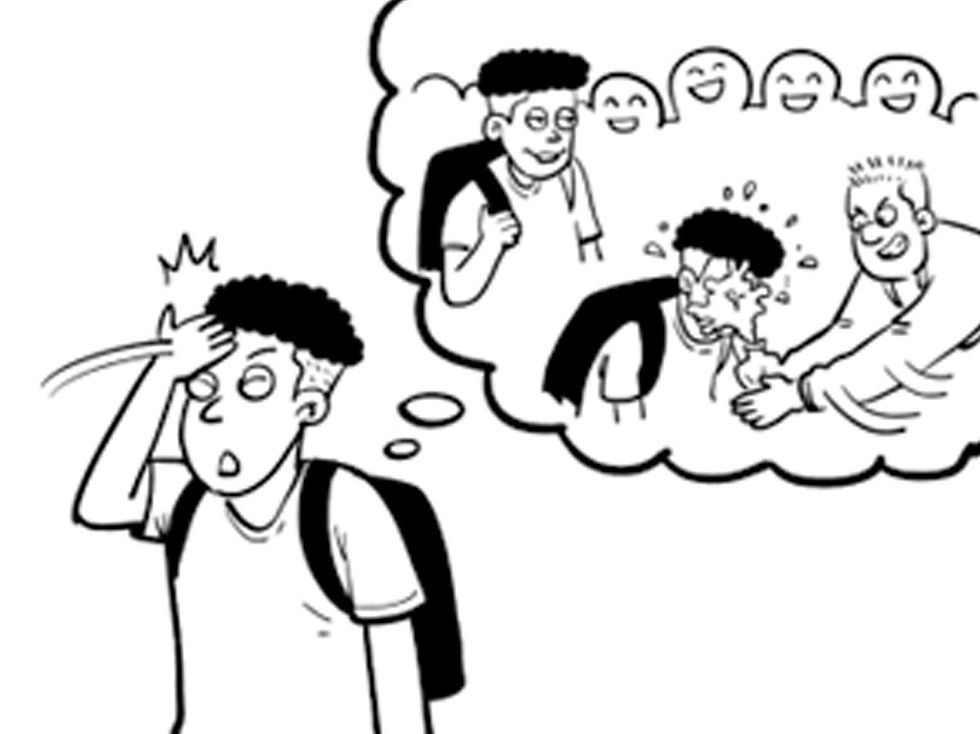 Have you ever been upset that you have been fooled or picked on? |  Don’t be hard on yourself. |
 If you think about these events in a positive way… | 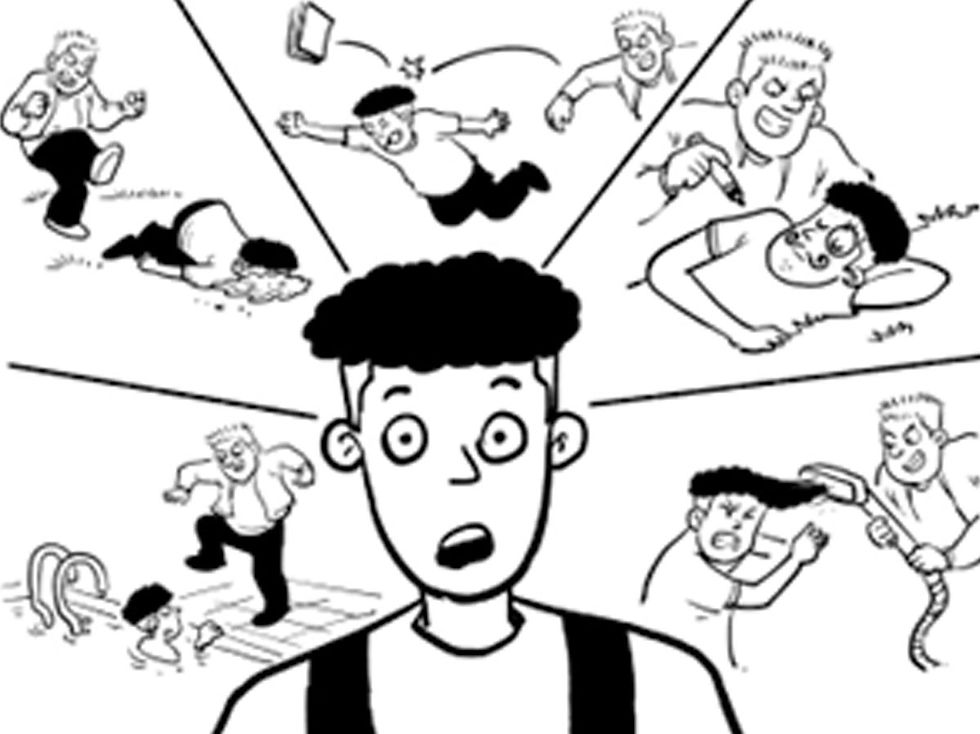 …you will realize these are valuable observations of patterns of behavior |
 You have an advantage over others; when they pretend to be foolish, it is obvious, as if they are wearing a visible mask. |  When danger is around the corner the last thing you want to do is to alert anyone harboring hostile intentions that you are aware of them. |
 If they have had the upper hand over you often in the past, they will eventually become arrogant… |  …and tend to take you lightly, which will result in letting their guard down… |
 …giving you the element of anticipation and surprise… |  …and even allowing you to turn their own ploy against them. |
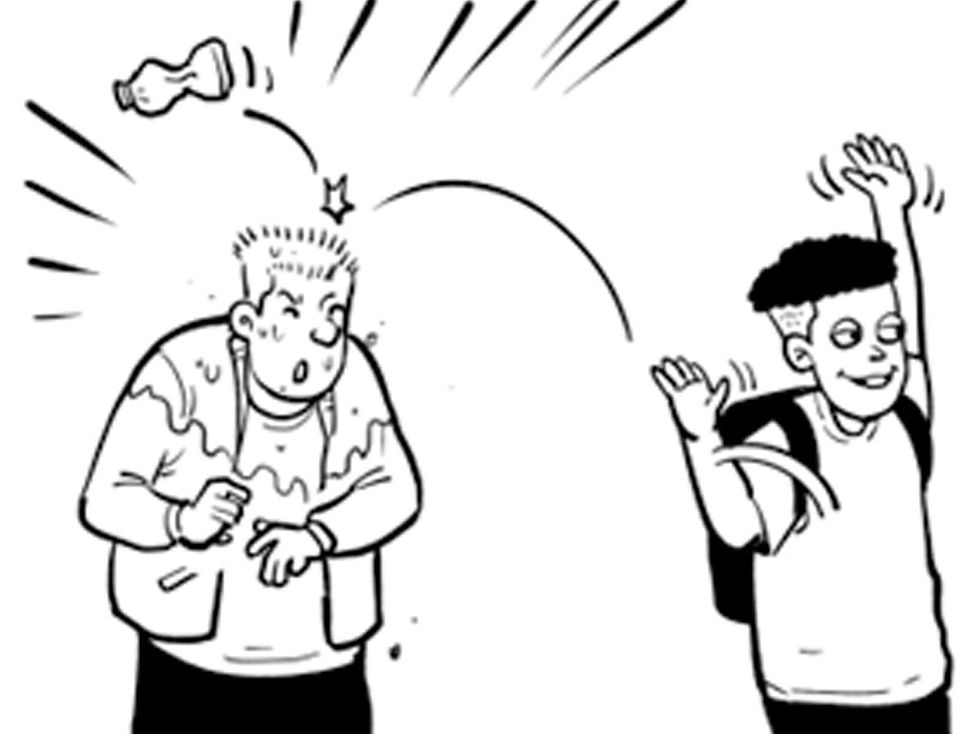 Which only proves… that the most foolish people are the ones who think everyone will always be foolish… |  Even if you have been fooled, smile and laugh it off, because a new lesson for you means a stronger you. Sometimes it does pay to be the fool. |
If you read my first book, The Multitude of Personalities Made Simple, which covers the symptoms of being a fool, and if you find yourself being a fool, don’t be depressed; you are most likely brighter than I used to be ten years ago (“If you only knew” D.K.). Knowing what makes them foolish is the beginning of a fool’s transformation. You have huge advantages over those who haven’t been in your shoes:
1. After reading about villainous behavior; how many villains have revealed their villainous nature to you? I promise you they are careful in hiding these natures to others, this gives you an insightful advantage over others in identifying villains.
2. Acting is hard in general, it requires you to fool the subconscious brain by evoking the right emotion in your heart to play the part; you are more familiar with how you felt and behaved when you missed queues and clues, and you subconsciously know what is like to be unaware of important things; Playing ignorant is therefore much easier for you than others. Having this ploy to hand gives you the element of surprise over those who wish to harm you. Even if they notice that you have adopted this tactic, it keeps them guessing instead of being certain about what is on your mind. Just remember, playing ignorant is not same as playing stupid; it doesn’t involve lying or deception, and people will always excuse you as long you are truthful.
3. Sometimes it serves your best interest to discover that you have been fooled. You see, if you had spotted a deception in action, the sudden surprise may mean that you do not have control over your emotions, and that it is written all over your face and body that you are aware of what is going on. If that happens, then, depending on how sensitive the situation is, the outcome can range from them leaving you alone to them inflicting harm on you in order to avoid exposure. For example: in the movies, how many times have you seen a scenario where someone was being lured into a trap, were going over documents, or were at the wrong place at the wrong time, and notices that there is a crime going on, of any type, and ends up being framed, in big trouble or dead because the villain/s knew they were aware? Sometimes being the fool can save your life. Furthermore, discovering that you been fooled can give you the upper hand as long as the deceivers haven’t achieved their ultimate goal, and are still unaware of your discovery.
4. Most people are satisfied with their knowledge and skills, and feel that they don’t need to improve themselves any further. You, on the other hand, you clearly need it, and within three years of sharpening yourself by reading and training, then you and those around you are going to notice a huge transformation for the better in your personality, and you shouldn’t be surprised if you surpass most people. I promise you, this is going to trigger an unstoppable desire and hunger to go even further.
I would also like to point out there are famous examples of people known as idiots, outcasts, underdogs, and losers, you name it, but who ended up turning things around, being successful and wise in their later years, or recognized after they were dead. Some have even changed the world due to their efforts. Here are a few of them:
· Socrates, was known as a fool by his people, and only a small proportion of the population knew he was wise and intelligent. The poet/playwright Aristophanes wrote a comic play called “The Clouds” that depicted Socrates as a fool. He was sentenced to death in a public trial for “corrupting the young and disrespecting the Gods”. They opened his cell hoping that he would leave town and never come back, but instead he cheerfully took the poison cup from the executor and drank it. He started to analyze and philosophize his experience of dying to his students as he was slowly fading away. Socrates is now known in modern history as one of the wisest intellects of his time, and his student Plato opened the very first academic institute of higher learning, which would be considered a university in our time. One of Plato’s student was Aristotle, who became one of the best intellects of his time.
· Tiberius Claudius Drusus Germanicus who was also referred as Claudius was known as a drunk and gambler who wasted his life in his earlier years. His uncle, Emperor Augustus, despised him and gave him a very small amount of money as his inheritance, as an insult. Tiberius was nowhere near becoming emperor, but, to make a long story short, after a turn of fate and luck, he ended up as emperor, and turned out to be a good one too; he managed to annex the British island.
· Vincent Van Gogh was a Dutch painter. He struggled with poverty and mental illness during his lifetime, and his work was rejected and unrecognized by the art world. It was only after his death that his work received the recognition and appreciation it deserves, and he is now considered one of the greatest artists in history, which makes you question who was the fool at that time.
· Mahatma Gandhi was initially seen as an outsider, and was ridiculed by many in the mainstream political establishment, but he eventually became a key figure in India’s independence, and is now considered one of the greatest leaders in modern history.
· Cao Cao, was the son of Cao Song, and Cao Song was a child who was given as a gift from the emperor to his eunuch, for adoption. At the beginning of Cao Cao’s life, he had a hard time being accepted due to his background, and he was looked down upon due to being related to a eunuch, especially by noble family members. He grew up a revolting, cheeky, and bold brat who took foolish risks and said the things that other people dread saying. He eventually grew out of brat-hood, but was still a very bold man who took risks and said things that could get him killed. He made a foolish attempt on Dong Zhou’s life which caused him to be a homeless fugitive on the run, and it is my belief that it was this difficult period that caused him to wise up, and became the turning point of his life. Because of his background, he already knew that promoting officers according lineage was an unwise move, so he based promotion upon talent and achievements. He had a rare talent for identifying people’s personalities and spotting talented people. After many successes in battle, he eventually established the Kingdom of Wei, and history recorded this man’s leadership as wise and intelligent.
· Nobunaga Oda, also known as “the fool of Owari” in his younger years, was a strange child; he was often shunned from traditions, and without a doubt this man was deviant in many ways. He was next in line for the Oda clan leadership, and some thought the Oda clan would be done for once he became the leader, but they were very wrong. Nabunaga’s weirdness prompted creativity. He experimented with making his weapons different; some were bad ideas and some gave his army an advantage. Like Cao Cao, he chose officers according to achievement and not lineage, although I believe he did that for the sake of doing things differently from the traditional ways, and he ended up surrounding himself with the best men. He came up with tactics to win major battles, and in some battles, he was the underdog and heavily outnumbered, yet he managed to emerge victorious from the smog of war. He eventually expanded the Oda clan’s territory and sphere of influence to the point that he came close to unify Japan, his successor, Toyotomi Hideyoshi, completed the unification of Japan. Nobunaga Oda is now called “the Great Unifier”.
Foolishness is the end product of growing up in a bad environment, having a lot of distractions, no mentor, and a lack of interaction. In this new era where parents are separated from their children by work and school, the media is acting as a major distraction, bad values and behaviors are introduced to the public, and the world population is becoming less and less social. All these factors are causing foolishness and ignorance to spread globally. Sadly, too much foolishness can get you into trouble and attracts villains to exploit you. I am not just talking about losing all your wealth, “if you only knew”; it can get a lot worse than you can imagine.
It is therefore you people are the ones that I hope will benefit the most from my books. You only need the first two chapters, about how to identify personality, and how the brain works; and about the program that is installed and running a human brain, and how are they triggered. These two will help you to understand people, and then you need to know how to identify villains and their evil schemes. I will try my best to make my books full of easy, valuable information, which is easy to read and entertaining.
But I strongly advise you;
· You need God, without God, you won’t get so far. You’ll see my books start with a verse that says “and say; My Lord, give me more knowledge” 20:114.
· You are going to have to do some study and work on your own.
o Choose topics you feel are important and that you need for the rest of your life. I have listed some books if you are unsure where to start.
o Bear in mind that some books are valuable but that their authors are the technical type. They get excited about all the details, and mention not only the facts, but include a number of studies, articles, experiments and their references between each point, and use the minimum font size to squeeze as much as possible onto each page. Their books are ridiculously overflown with information which can overload the brain and bore you to death, as “unintentional brain assassinators”. You are going to need a highlighter to highlight the points you need to know the first time you read, otherwise it will be too much work when rereading the book later.
o You need to bear in mind that the human brain has a memory curve. After reading the book once you’re going to lose most of the information. The more you reread books you need the more you will remember. The next time you read them, you will also more easily understand them. If you feel a subject is important to life, then I suggest rereading it five times, with a break of one week to three months between each reading session.
· Ease off on entertainment, and meditate to improve your focus. Meditating is easy to do while sitting or walking. Go to the park or wilderness, feel your body, organs, and breath; listen and see all your surroundings, the cars, birds, wind and people; focus on the sunrise, sunset, moon or stars, and see the details that you might otherwise fail to notice. This helps you to sharpen your focus over time and trains your brain not to slip away in thoughts, The Power of Now, by Eckhart Tolle is a book that I recommend if you want more information on the topic.
· Improve your observation skills: “Perceptive Power” by Edward E. Beals and William Walker Atkinson is a good book, and enjoyable, which explains observation and gives examples on how to train your skills (this book is part of the Personal Power books series)
· Find your weaknesses, and get them up to average. “Heads First” by Tony Buzan is a great book to find out where you are lacking, and he also gives suggestions on how to better yourself in each type of intelligence. From there you will know what to do, or what to read to better yourself.
· Read books about body language and facial emotions. This helps you understand people’s emotions, and, for example, you can see that some people smile to give you the impression that they are happy and relaxed, but if you notice that they can’t stand still and that their hands are in their pockets, and know what this means, then you will know that they are worried about something, and smiling is just an act.
· If you have had positive results from two years of self-improvement, I suggest studying the cause and effect of actions. A good book for that, believe it or not, is “Raising A Thinking Child” by Myrna B. Shure. Ask any teacher; if you want to learn something then study it, and then after that if you want to learn it better, teach it to someone.
· If you have had positive results from five years of self-improvement, I suggest using what you learnt to train yourself to think beyond the present; predicting and calculating the possible outcomes from the series of current events, and also studying and reviewing your own past experience. With a new perception and understanding you will be surprised at how many details you overlooked as insignificant; some of them could be of great value, and even more if you are the only one who knows about them.


Comments